Establishing a Wholesale Fund
By the time a wholesale fund is ready to take its first investment, the structure and documents are settled and the strategy is ready to market. Accepting that investment is where the establishment work comes into play: licensing, issuance and operating arrangements have to work together.
It starts with the structure
A common structure for an Australian wholesale fund is a unit trust operating as an unregistered managed investment scheme. For venture capital strategies, an ESVCLP or VCLP may be an alternative where the relevant eligibility requirements can be met.
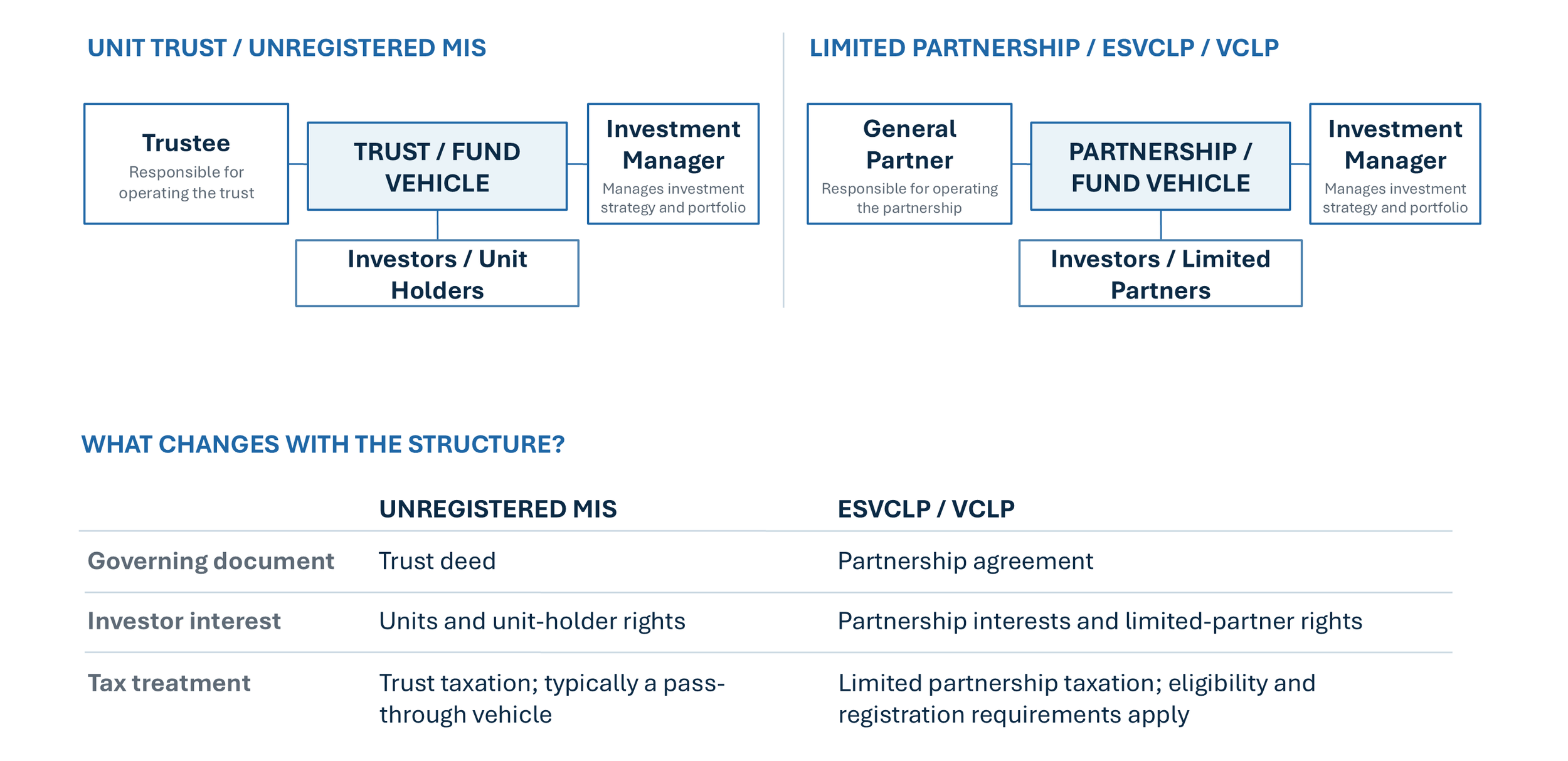
Those roles then determine the licensing analysis.
Authorisation and issuance are separate questions
Consider a unit trust with a separate trustee and investment manager.
The investment manager may hold its own AFSL or provide specified financial services as a Corporate Authorised Representative (CAR) of another licensee.
The trustee’s position as issuer is separate. If it holds the required AFSL authorisation, it may issue the fund interests itself. Where it does not, a Licensed Intermediary arrangement may provide a pathway for the issue.
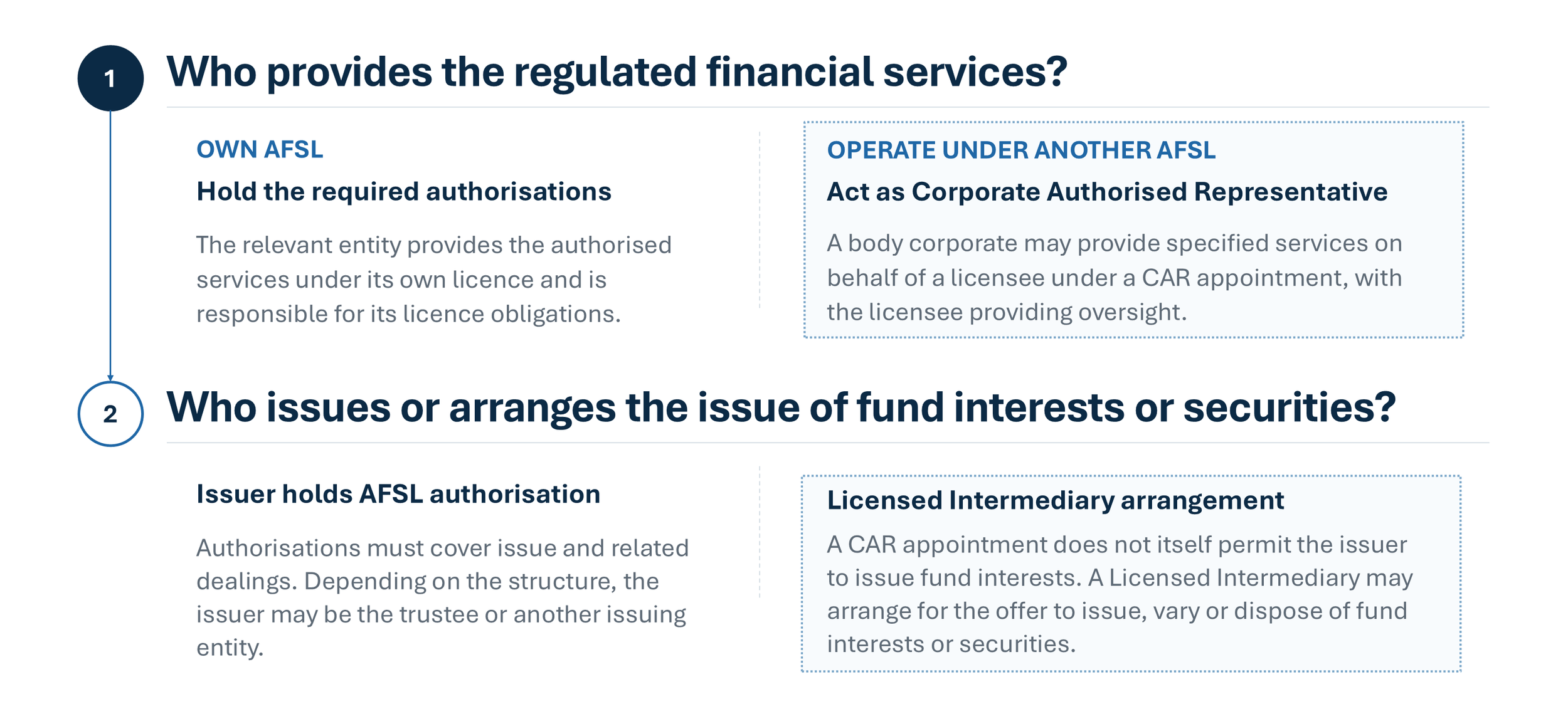
Because “licensing” tends to be discussed as a single part of fund establishment, this distinction can be missed. A CAR appointment for the investment manager does not, on its own, resolve the position of a separate issuer.
ASIC’s guidance reflects that separation. When a trustee issues interests in its own scheme, it does so as principal and cannot rely on an authorised representative appointment to issue those interests on behalf of another licensee.
The example below shows one way those arrangements can come together in a unit trust.
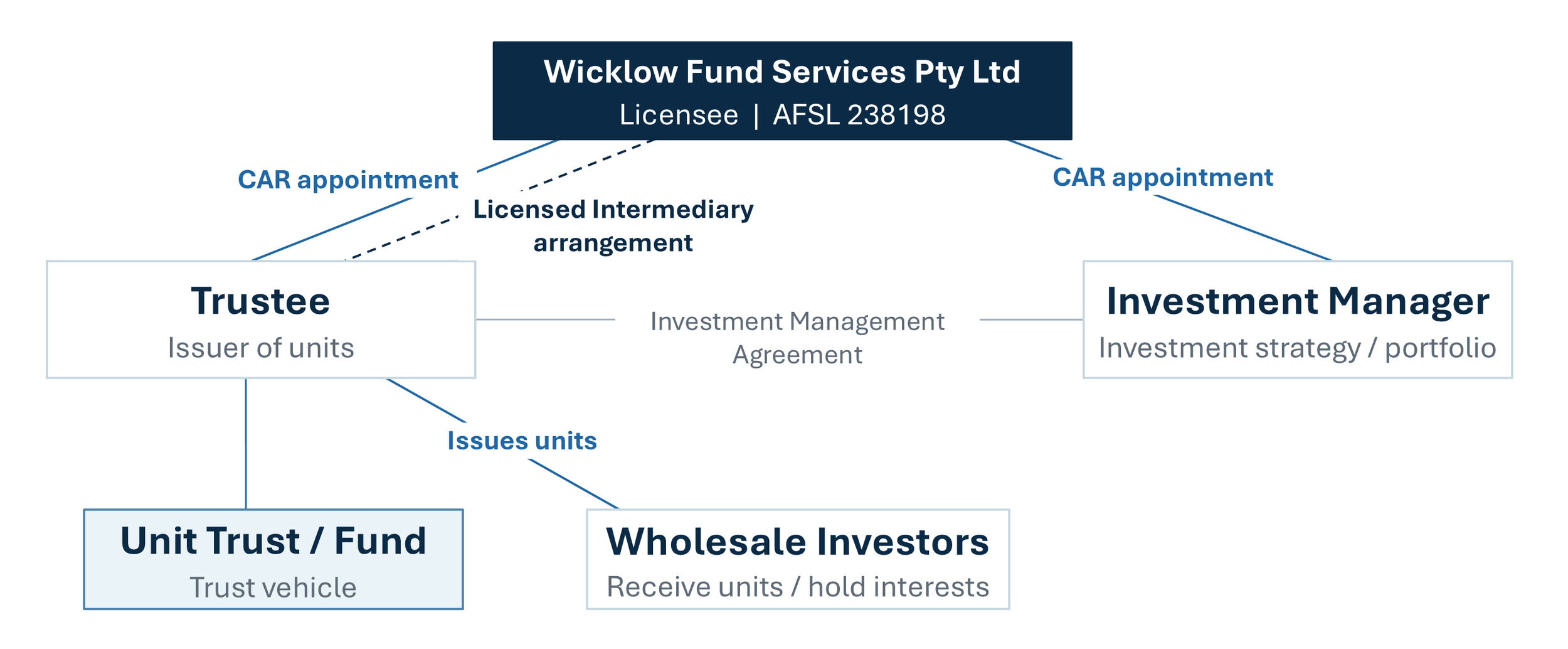
Illustrative unit trust licensing model
In-house or specialist support?
Once the structure and licensing model are settled, the next decision is which functions stay in-house and where specialist support is used.
Investment strategy, portfolio decisions and key investor relationships will generally remain close to the manager. Other operating functions can be built around that core.
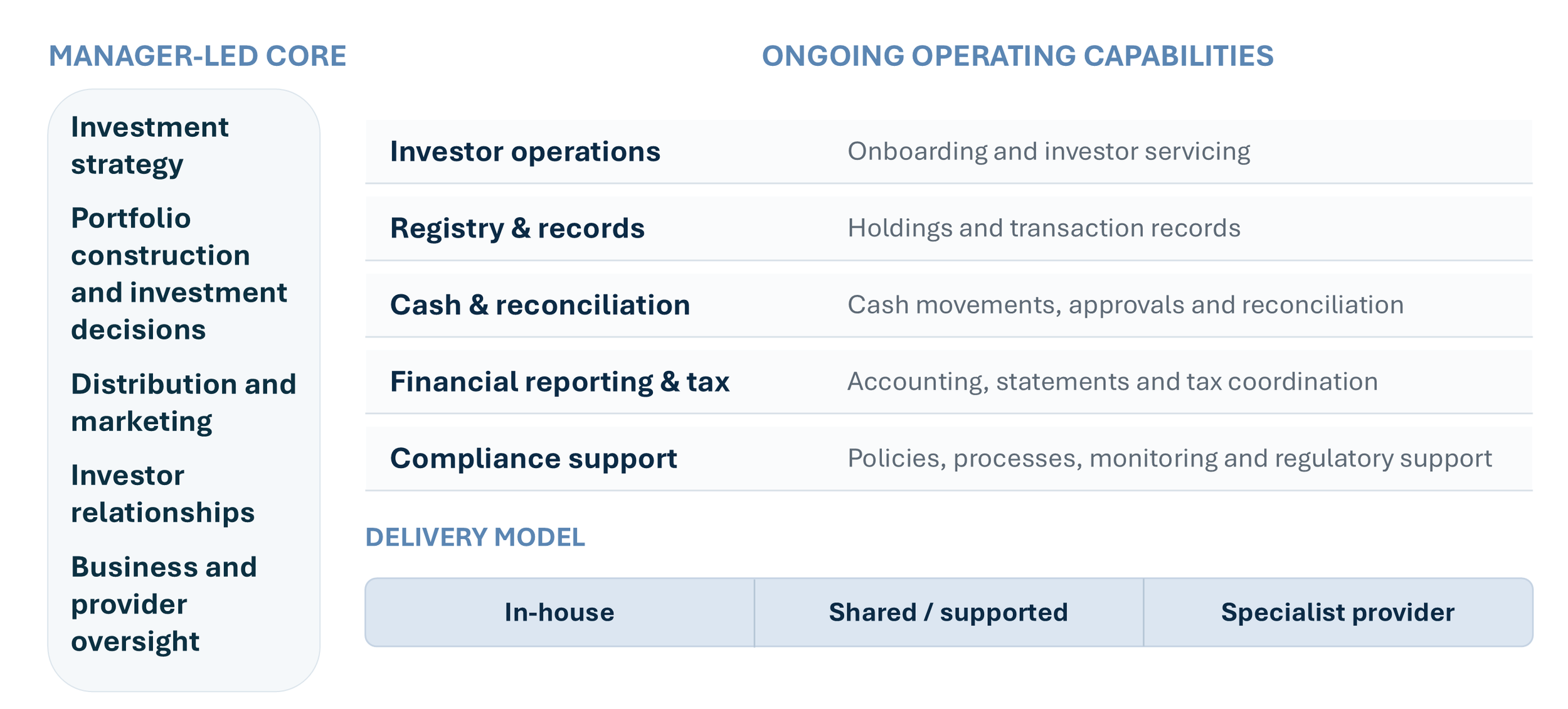
A well-designed approach keeps judgement and control with the manager without requiring every specialist capability to be built internally.
Connecting the operating model
Responsibilities may be clearly allocated, but the fund still depends on information, instructions and decisions moving between the manager and its providers.
Mapping the fund’s main operating events against those responsibilities is a useful way to test the hand-offs before launch.
Where Wicklow fits
Preparing for a first investment is not about any one function in isolation. The decisions made at establishment carry through into how a fund operates.
Wicklow works with wholesale fund managers and their advisers on licensing and ongoing operational support. Services can be engaged individually or combined.
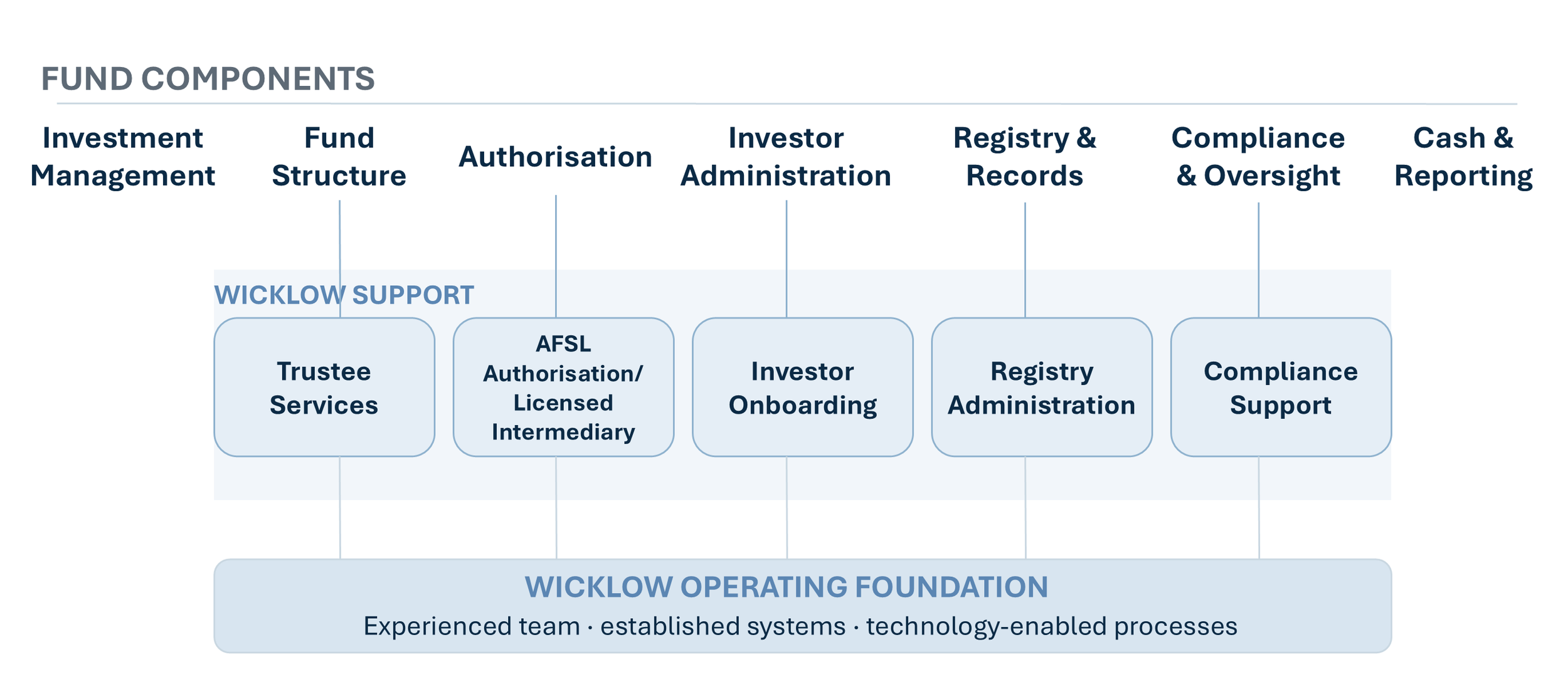
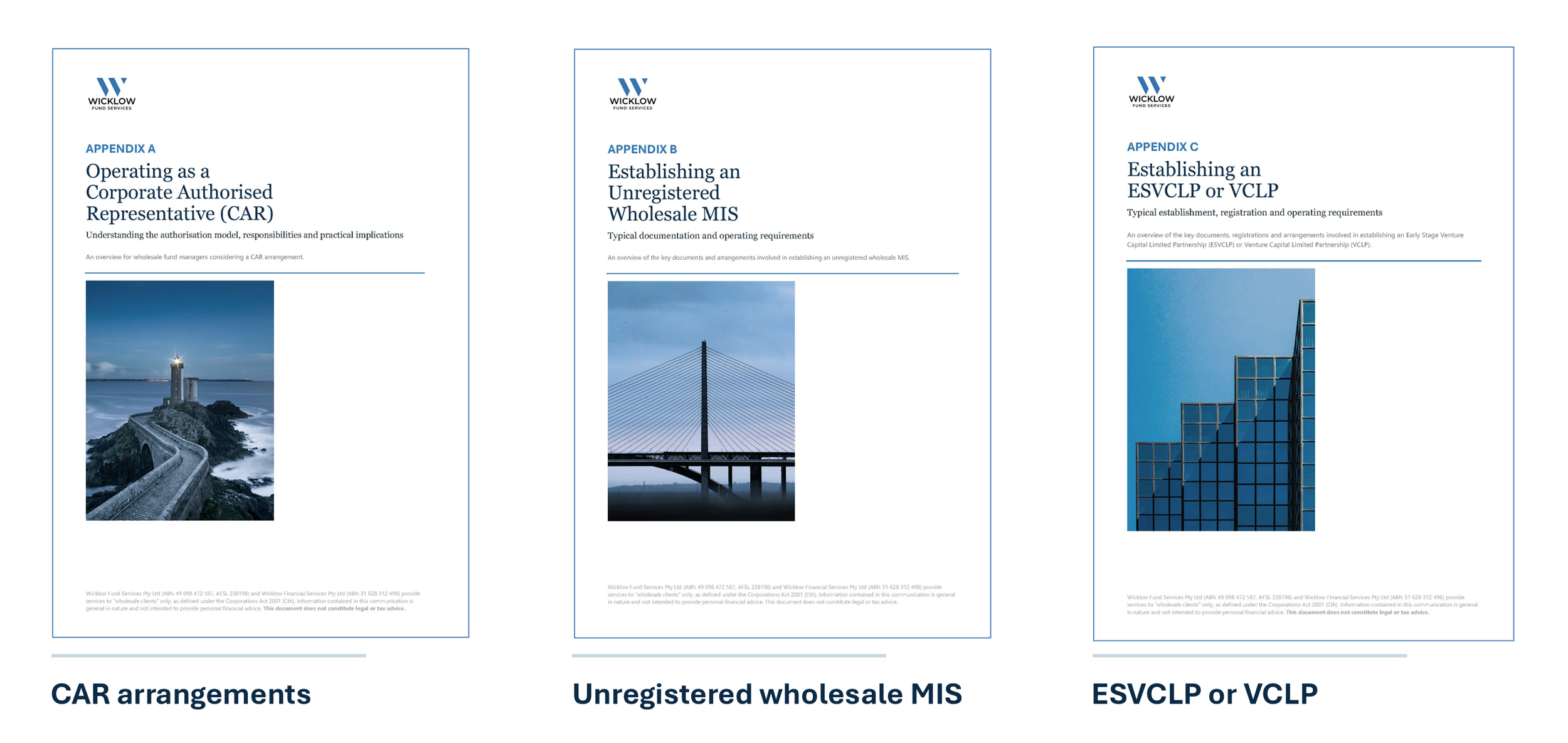
For managers considering a fund launch, Wicklow has also prepared three practical guides covering common authorisation and fund establishment questions.
Operating as a Corporate Authorised Representative (CAR)
Authorisation model, responsibilities and practical implications.
Establishing an Unregistered Wholesale MIS
Typical documentation and operating requirements.
Establishing an ESVCLP or VCLP
Typical establishment, registration and operating requirements.